Some of us are fortunate enough to be born to parents whose single greatest wish is to love and cherish us. They are the lucky ones, I think, although many times they are the clueless ones, as well, having absolutely no awareness of their blessings, buffered as they are by their own ignorance. Staggering about in a bubble of moronic superiority, these people are often oblivious to the troubles suffered by those around them. Others of us are born to parents who reluctantly fulfill what they view as a grudging obligation to parenthood. They put forth as little effort as possible, as little love as possible, and do so in as half-assed a manner as they can get away with. I was raised (sort of) by reluctant parents, which I’ve written about at length, and their legacy to me was an irrational fear of being abandoned.
There are still others of us, a large, even staggering majority, who are born into fear. This may be an existence where monsters are not only real but highly manifest in the behavior seen in our parents who, themselves irreparably damaged, hand down a legacy of terror, wrapped like a gift in ignorance, rage or sadism, as though it were a precious family heirloom. Of course, horror can be an outside element, too, like genocide, ethnic cleansing, war, famine, starvation and the like. I’ll stick to what I know in this narrative, which is your basic, suburban, family style dysfunction.
I like to think my daughter is one of the fortunate children, born into a loving family, although I also believe it is my responsibility to raise her with an awareness of the world at large. Unless we expose our children to the world’s difficulties in an appropriate manner, in a way they can assimilate and understand, they may grow to be terribly unprepared for the cesspool we live in and then perpetuate an entirely new kind of ignorance. For example, computers, the World Wide Web, chat rooms, and instant messaging are facets of our world, and while they have become an integral part of school and college, they are best used in moderation by growing children. Over use or use in desperation or abject loneliness can lead to misguided interaction, and then an introduction to on-line predators, of which there are many. As if there aren’t enough perverts in real life, now we have to worry about these sick-o’s predating our children in cyberspace, too.
You don’t have to serve in Bagdad to know there are many landmines on the American landscape.
For those of us born into a world of fear, passed down either helplessly or in ignorance, mayhap even deliberately by our parents, our perception is forever clouded by that toxic environment. When perpetually present at the earliest and most impressionable stages of development, I believe fear and its subsequent responses are burned into the hard wiring of our most impressionable childhood brains.
The question is: Can that hardwiring be deprogrammed?
I can’t help but be amazed at how well adjusted my daughter is in her relationships. I have to attribute the majority of this well adjusted upbringing to Leslie, however, who was self-aware as a little girl, and is equally as aware as an adult. I, on the other hand, had to grow and evolve to achieve the same personal realization. Elizabeth, or Liz, as she is referred to by her friends, knows what she does and doesn’t want in a friend, and she is very clear on her feelings when she is “dissed”. Yes, she actually uses that word. Elizabeth and Margaret are still best friends for life, for example, but they parted ways with Lindsay, the third in their trio, a while before school ended and before we left the State of Connecticut. In fact, at one point, Margaret’s mother, who plays tennis once in a while with Lindsay’s Mom, asked if the girls, the three of them, could get together for one last play date before we left. Elizabeth was adamant that she didn’t want to be mean, but she and Lindsay were no longer friends, and she did not want to have a play date. When the trouble with Lindsay started, she approached the problem analytically (which is her nature, an Aries/Virgo through and through), and because she isn’t an emotional beggar like I was, desperate for attention from parents, friends, or anyone really, she saw the truth of it and accepted what was happening. She did not view the failed friendship as a reflection of her self-worth. Nor did she hang on to the friend until the relationship soured and became destructive. I was impressed by her confidence and her certainty. Leslie and I discussed the issues that came up, because Margaret’s mom had mentioned it. I was eager to stand behind Elizabeth’s decision, which was justified and made in good conscience; but it was she, however, who understood and maintained her position despite the adults around her having differing opinions.
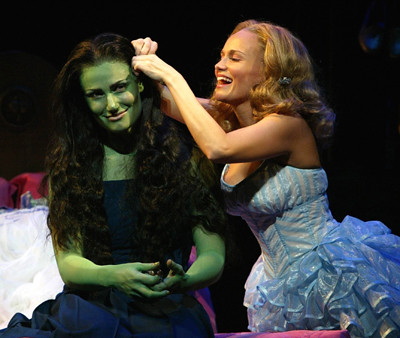
I remember having a bosom friend when I was six years old. Her name was Jennifer, and she was an angelic blonde. I loved her madly and intensely, as only a six year old can, and her family lived across the alley behind our house on Hawley Avenue. Her mother had flaming red hair and a pottery studio in a building behind the house. It was a magical place full of clay, sculpture and fire kilns. Leslie would say it was very seventies. The summer before second grade, a time when each kid year seems like ten years and summers go on forever and ever, they moved away. I was sad. I remember standing at the back window watching them pull away, perhaps with my own theme song music playing a sad requiem in my brain. It felt like my heart was breaking. Circumstances, however, hadn’t turned me yet into an emotional beggar, although they were steadily chipping away.
The friendships I had when I was a teenager were made of the usual stuff; things in common, like dancing school, fantasy, and a love of comic books and drawing. These relationships were woven together by the depth of my need and a desperate fear of abandonment, issues I know my daughter will never be burdened with. I was by no means a quiet little wall flower. I was a strange teenager, a drama queen, who was obsessed with children’s theater. As much as I loved my girlfriends, a eclectic group of confused and weird high school students, I desperately needed them, along with their approval and attention. You see, by this time at about 15 or 16, I had become an emotional beggar, molded as such by the emotional unavailability of my parents, and their repeated disappearances.
But what if, instead of abandonment, which began in my life at 4 years old, the issues my parents brought to the table were more mental illness or violence. What if, instead of leaving me, my mother kept me up all night, night after night, screaming about monsters she saw under the bed waiting for her? What if, instead of judging me and standing behind a shield of cult worship, my father had sexually abused me again and again? What if I grew up convinced on a most cellular level that bad things not only do happen to good people, but they can be more or less depended upon?

What if that deep fear response had been hard wired into my brain before I had any choice in the matter?
Is it possible to deprogram ourselves? If we know we are missing a critical part of the ability to overcome obstacles in our adulthood, things that hamper our ability to engage in the pursuit of happiness, must we accept this as the limit of our potential? Must we remain content to wallow in an understanding of misery while holding our long standing fear responses close as comfort, as we curse the power of positive thinking?
I believe there is healing in the world. It is available to everyone, but we must want it badly enough to override our fear responses in order to pursue it. And then we must stick with it long enough to allow it to work its magic.
They say that the Goddess helps those who help themselves, and this I know from experience to be true.
My question is: Will you take the leap of faith that gets you there?
End Note: All photos in this posting are from the Broadway Musical, "Wicked". All rights are reserved by the photographers, certainly not by me.